Carpet beetles and pantry pests are the two household "cryptic damage" pests Toronto homeowners confuse most: one eats your wool and clothing, the other ruins your dry food, and both work quietly for weeks before you notice. Carpet beetle larvae chew irregular holes in wool carpets, sweaters, and upholstery; pantry moths and beetles turn a bag of flour into webbing and larvae. Neither bites you (if someone in the house is waking up with bites, that is a bed bug treatment in Toronto job instead, and fast brown insects under the sink at night call for cockroach control in Toronto), and for both, finding and removing the source is half the job. Most Toronto jobs run $200 to $450, take one visit plus a follow-up, and come with our two-month guarantee.
How to tell carpet beetles from clothes moths and bed bugs
If you are finding small, irregular holes in wool clothing or carpet and no one is being bitten, it is a fabric pest, not bed bugs. It is a very common mix-up, so here is the clean way to tell them apart:
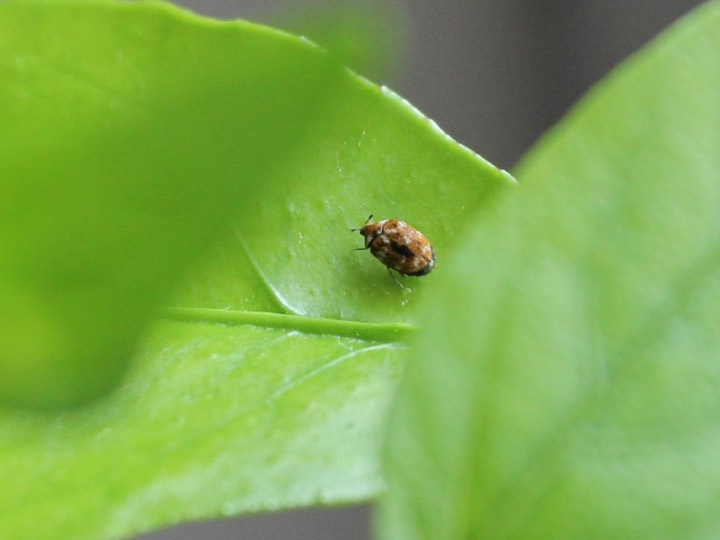
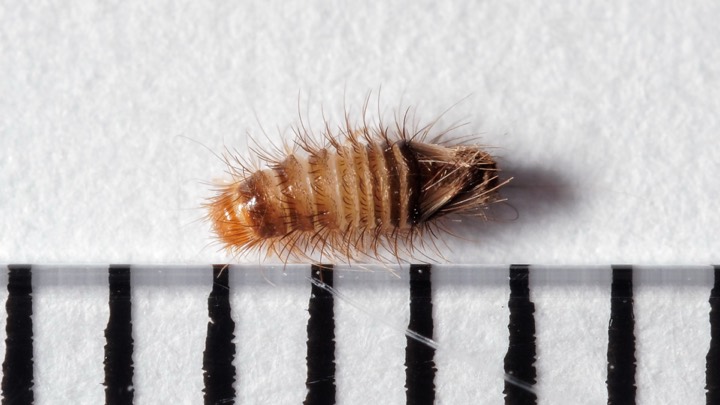
- Carpet beetles. Larvae are tiny, tan, and bristly, and they shed those bristly skins as they grow, so you find little cast-off husks in drawers, along carpet edges, and under furniture. Damage is scattered irregular holes across an area, often near the fibre's surface. Adults are small rounded beetles, mottled black-white-yellow or solid dark, found on windowsills because they fly to light.
- Clothes moths. Damage is concentrated holes plus fine silken webbing or grainy "cases" stuck to the fabric. You may see small buff-coloured moths that avoid light and prefer dark closets, the opposite of carpet beetle adults at the window.
- Bed bugs. They leave bite welts on skin, blood specks and dark fecal dots on the mattress and sheets, and live in the bed frame, not the closet. They do not touch wool or clothing fibres. If people are waking up with bites, read the bed bug treatment page instead, because the plan is completely different.
Carpet beetle larvae leave irregular holes and shed bristly skins, and they do not bite people. The itchy welts some people blame on "carpet bugs" are usually a skin reaction to the larval hairs, not a bite.


Why carpet beetles show up in Toronto homes
Carpet beetles feed on natural fibres: wool, silk, felt, feathers, leather, and animal hair. Toronto's older housing stock is ideal for them, because wool broadloom, wool area rugs over hardwood, and natural-fibre furniture are common in the Annex, Cabbagetown, the Beaches, and the east-end semis. The larvae are the destructive stage, and they hide where you rarely clean:
- Along the tack strip and edges of wool carpet, and under area rugs.
- Under and inside upholstered furniture that is rarely moved.
- In closets, on stored wool, silk, and fur, especially items put away dirty.
- In air vents and returns, feeding on the lint, pet hair, and dander that collects there.
- On taxidermy, wool blankets, felted crafts, and boxed textiles in storage.
Adults get in through open windows in spring and early summer, drawn to light, and lay eggs near a larval food source. A stored wool coat with a food stain is exactly what they look for.
Pantry pests: Indian meal moths and pantry beetles
If you see small moths flying in the kitchen or webbing in a bag of flour, you have a pantry pest, and the infested product is the source. Indian meal moths are the usual Toronto culprit, along with sawtoothed grain beetles and flour beetles. They infest dry stored food: flour, grains, cereal, rice, pasta, spices, dried fruit, nuts, birdseed, and pet food. The larvae spin silk webbing through the food, and the moths you see flying are the adults looking to lay the next batch of eggs.
The key point for pantry pests is that they almost always arrive inside a product you brought home, not through a window. Grain products can be infested at the source before you buy them. That is why the fix starts in the cupboard, not with a spray.
The honest fix, and when you can do it yourself
For both of these pests, the customer often can remove the source without a treatment, and we will tell you when that is the case, because we do not upsell.
Carpet beetles. Thorough vacuuming is the core of the job: carpet edges, under furniture, closet floors, and inside vents, then empty the vacuum outside. Launder infested clothing and linens in hot water and dry on high heat, or dry-clean wool and silk that cannot take hot water. Heat and laundering kill every life stage. A light case caught early, on one rug or one drawer, is often solved by cleaning alone.
Pantry pests. Find the infested product and throw it out, then wipe down the cupboard, including the shelf corners and the underside of shelves where larvae crawl to pupate. Check every open dry-goods package, because the moths spread between them. Move surviving food into sealed glass or hard-plastic containers. No spray fixes a pantry moth problem if the infested bag stays in the cupboard.
We add a treatment only when an infestation is established and cleaning alone will not catch up: widespread larvae across multiple rooms, activity that keeps returning after you have cleaned, or a heavy pantry infestation that has spread beyond one product.
How Insectica treats an established infestation
When a treatment is warranted, we start with a free inspection to confirm the pest, find every harbourage, and identify the source, then treat only where the larvae live. For carpet beetles that means targeted application of a Health Canada PMRA-registered residual product to the harbourage points: carpet edges, under and behind furniture, closet and vent areas. For pantry pests it means treating the emptied cupboard after the infested food is removed, never spraying near food that stays in use.
We do not fog a whole house or spray a whole pantry for these pests. The larvae live in specific spots, so blanket spraying wastes product and treats surfaces the pest never touches. Targeted treatment of the harbourage, plus the cleaning you can do yourself, is what actually clears them.
Every job is backed by our two-month guarantee: if the pest is still active within two months, we come back once at no charge. The work is carried out by Insectica Pest Control, owner-operated out of a Scarborough storefront, licensed and insured, BBB A-accredited and a CFIB member, with same-day service and a typical response around 45 minutes. Restaurants, cafes, and any food-storage business fighting pantry pests should see the commercial pest control page, and the cost page breaks down pricing for every pest.
Common questions
Are carpet beetles the same as bed bugs?
No. Carpet beetles eat natural fibres like wool and silk and do not bite people, while bed bugs feed on blood and leave bite welts. Carpet beetles live in closets, carpets, and vents; bed bugs live in the bed frame and mattress. If people are being bitten, it is not carpet beetles.
Do carpet beetles bite?
No, carpet beetles do not bite. The itchy rash some people get near an infestation is a skin reaction to the bristly hairs on the larvae, not a bite. There is no venom and no blood feeding involved.
What causes carpet beetles and pantry moths?
Carpet beetles come in as adults through open windows and lay eggs near natural fibres like wool carpet and stored clothing. Pantry moths almost always arrive inside a dry-food product that was already infested when you bought it. Neither is caused by an unclean home, though clutter and stored food give them more places to establish.
How do I get rid of pantry moths in my kitchen?
Find and throw out the infested product, then empty the cupboard, wipe it down including shelf corners and undersides, and check every dry-goods package for webbing. Store the food you keep in sealed glass or hard-plastic containers. Removing the source is the fix; a spray on its own will not work if the infested food stays.
Do I need a professional?
Not always. A light, early case on one rug, one drawer, or one bag of food can usually be handled with vacuuming, hot laundering, or discarding the product. Call a pro when the larvae have spread across multiple rooms, the problem keeps coming back after cleaning, or you cannot find the source.
Will carpet beetles and pantry pests spread through the whole house?
They can, slowly, if the source is not removed. Carpet beetle larvae wander from room to room looking for fibre and can set up in several closets and carpets over time. Pantry pests spread from the first infested package to every open dry-good nearby. Removing the source early is what stops the spread.
Reviewed August 2026.
Prefer to talk? Call
(365) 217-5987Tell us the pest and your neighbourhood and we give you a price range on the spot. The inspection is free, and there is no charge to ask.
- Published price ranges, no "call for a quote"
- Free inspection, price locked before we start
- Licensed and insured technicians
- Two-month guarantee, one free re-treatment
- Honest advice if you do not need a pro yet
Toronto & the GTA · Same-day, 24/7 for emergencies
Get a straight quote
Tell us what you are seeing and we come back with a price range and a time. No obligation, no on-site surprise.