Getting rid of fleas in a Toronto home means treating two things at once: the home and the animal that carries them. The adult fleas you see are a small slice of the problem, so a single spray clears the biters for a few days and then the eggs, larvae and pupae hidden in your carpet, bedding and floor cracks hatch and it starts again. A proper flea job accounts for that whole lifecycle, is timed to the pet's vet treatment, and usually needs one follow-up, which is why it comes with our two-month guarantee. Free inspection, same-day service, and PMRA-registered products that are safe around pets when used as directed.
Where Toronto fleas come from
Most flea calls in Toronto trace back to a pet, but plenty come from an animal that was already gone before the biting started. Dogs and cats pick fleas up outdoors or from another animal and carry them inside, where the fleas lay eggs that drop off into carpet and bedding. That is the common case.
The one people miss: fleas left behind by wildlife. When a raccoon or a squirrel nests in an attic, a soffit, or under a porch and then moves on, the fleas it was carrying stay put and start looking for a new host, which turns out to be you and your pets. We do not do wildlife removal, so if an animal is still in the structure you will need a separate company to handle that. What we do is clear the fleas it left behind, and we will happily treat the home while the wildlife side is dealt with in parallel.
The third case is renters. If you move into a unit or a carpeted apartment where the previous tenant kept a pet, you can inherit a live flea population that has been waiting in the flooring for a host. You did not bring them and you may not even own a pet.
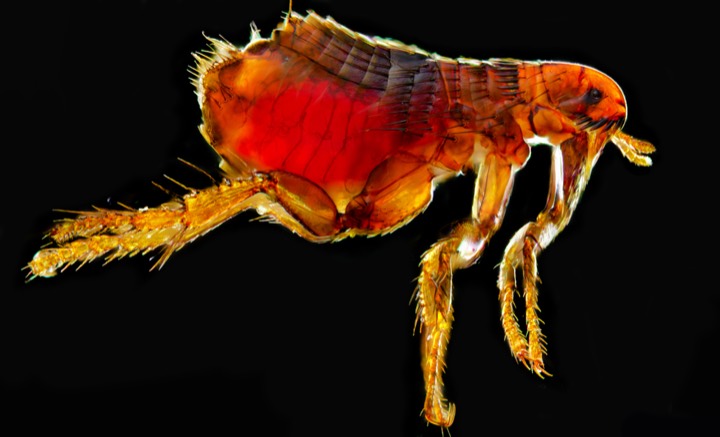

Why one treatment fails: the flea lifecycle
The reason DIY flea sprays disappoint is that adult fleas are only about 5 percent of the population in a home. The other 95 percent are eggs, larvae and pupae buried in carpet fibres, along baseboards, in pet bedding, and down in floor cracks where a surface spray never reaches. Kill every adult today and the eggs keep hatching for weeks.
The pupal stage is the real problem. A flea inside its cocoon is shielded from insecticide and can wait, dormant, for weeks until it senses warmth and vibration, meaning your footsteps. That is why a treated home can look clear for ten days and then suddenly have fleas again. It is not that the first treatment failed; it is that a new wave emerged from cocoons that were untouchable the first time.
This is exactly why our two-month guarantee with a free re-treatment matters for fleas specifically. A single visit rarely catches every stage. If activity comes back inside the two months, we return once at no charge to hit the wave that hatched after the first treatment.
Treat the home and the pet together, or it bounces back
Treating the house without treating the animal, or the animal without the house, does not work. The pet re-seeds the carpet within days, or the carpet re-infests the pet, and you are back where you started. You need both on the same timeline.
Your part is the animal: get flea treatment from your veterinarian for every pet in the home, and let the vet choose it rather than a pet-store remedy, some of which are dangerous to cats. Our part is the environment. When the two happen together, the pet stops carrying new fleas in while we clear the ones already living in the flooring.
What you can do to make the treatment work
Preparation genuinely improves the result, and it is work only you can do:
- Vacuum thoroughly before the visit, carpets, rugs, upholstery, and along every baseboard. The vibration and suction pull up eggs and coax some pupae to hatch so the treatment can reach them. Then take the vacuum bag or canister contents straight outside to the bin, because live fleas can survive inside it.
- Wash all pet bedding in hot water, and anything the pet sleeps on with you.
- Clear the floors. Pick up toys, shoes, and clutter so we can treat the whole floor surface, not just the open patches.
- Plan to keep vacuuming every couple of days for two to three weeks after treatment. It keeps triggering the remaining pupae to emerge into treated areas.
PMRA-registered products, safe around pets and kids
We use products registered by Health Canada's Pest Management Regulatory Agency, applied by the label. Used as directed, they are safe for homes with pets and children. On treatment day we tell you which areas to stay off and for how long while the product dries, typically a few hours, and we keep pets out of treated rooms until then. No upsell: if the honest fix is treatment plus your vacuuming and the vet's pet treatment, that is what we will tell you.
If you rent: who pays for flea treatment
In Ontario, a landlord is generally responsible for keeping a rental unit free of pests, including fleas, under the Residential Tenancies Act, even when a tenant's pet was involved. Report the problem to your landlord in writing. If it is not dealt with, tenants can apply to the Landlord and Tenant Board. Where a tenant's own conduct clearly caused the problem the responsibility can shift, but the starting point is the landlord's duty to maintain the unit. Our landlord and tenant pest guide walks through who is on the hook and how to document it.
Fleas are often confused with the other bite people worry about in Toronto apartments. If the bites are in lines on skin the sheets touch and you have no pet, read the bed bug treatment page, because that is a different insect and a different plan.
Common questions
Can you get fleas without a pet?
Yes. Fleas come into pet-free homes two common ways: from wildlife like raccoons or squirrels that nested in the structure and left fleas behind, and from a previous tenant's pet in a rental or carpeted apartment. The fleas live in the flooring and bite whoever is there.
How many treatments does it take?
Usually one thorough treatment plus one follow-up. The follow-up catches the wave of fleas that hatch from protected cocoons after the first visit, which surface insecticide cannot reach. Our two-month guarantee covers that return at no charge if activity comes back.
Are flea treatments safe for my pets and kids?
Yes, when done correctly. We use Health Canada PMRA-registered products applied by the label, and we tell you which areas to keep pets and children off until the product has dried, usually a few hours. The pet's own flea treatment should come from your vet, not a spray meant for the home.
How do I prepare my home for flea treatment?
Vacuum all carpets, rugs, upholstery and baseboards, then put the vacuum bag straight in the outside bin. Wash pet bedding in hot water, and clear toys, shoes and clutter off the floors so the whole surface can be treated. Keep vacuuming every couple of days for two to three weeks afterward.
Do fleas live on humans?
No. Fleas bite people but do not live or breed on us; they need an animal host and our lack of fur makes us a poor home. They live in carpet and bedding and feed on people when a pet host is not available, which is why bites keep happening in a home with no pet.
Who pays for flea treatment in a rental, the landlord or the tenant?
In Ontario the landlord is generally responsible for keeping the unit pest-free under the Residential Tenancies Act, even if a pet was involved. Report it in writing; if it is ignored, you can apply to the Landlord and Tenant Board. See our landlord and tenant pest guide for how to document it, and the cost page for pricing.
Reviewed October 2026.
Prefer to talk? Call
(365) 217-5987Tell us the pest and your neighbourhood and we give you a price range on the spot. The inspection is free, and there is no charge to ask.
- Published price ranges, no "call for a quote"
- Free inspection, price locked before we start
- Licensed and insured technicians
- Two-month guarantee, one free re-treatment
- Honest advice if you do not need a pro yet
Toronto & the GTA · Same-day, 24/7 for emergencies
Get a straight quote
Tell us what you are seeing and we come back with a price range and a time. No obligation, no on-site surprise.