Kitchen flies are a source problem, not a spraying problem. Fruit flies breed in fermenting produce, spills, and the residue in recycling bins; drain flies breed in the organic gunk lining your sink and floor drains. Find and remove that breeding source and the flies stop within days. In a restaurant kitchen, flies are part of commercial pest control in Toronto, and fast brown insects under the sink at night are a cockroach control job, not a fly job. Spray the air without removing the source and you kill the flies you can see while a new batch hatches behind you. This page covers how to tell the two apart, how to find the source yourself, and when a Toronto kitchen genuinely needs a professional.
What is the difference between fruit flies and drain flies?
Fruit flies are tan or brown with red eyes and hover around fruit bowls, bins, and open drinks. Drain flies are darker, fuzzy, and moth-shaped, and they sit still on the wall right next to a drain. The two get confused constantly because they show up in the same kitchen at the same time of year, but they breed in different places, so the fix is different for each. Get the identification right first, because chasing the wrong source is why people stay stuck for weeks.
Fruit flies breed in food; drain flies breed in the drain. Kill the breeding site and the adults die off on their own.
A quick way to tell them apart: watch where they rest. Fruit flies swarm and hover around ripe or fermenting food; drain flies barely fly, land on vertical surfaces near a drain, and leave a smudge if you squash one. If they are moth-like and stuck to the wall, you have drain flies, and no amount of throwing out fruit will help.
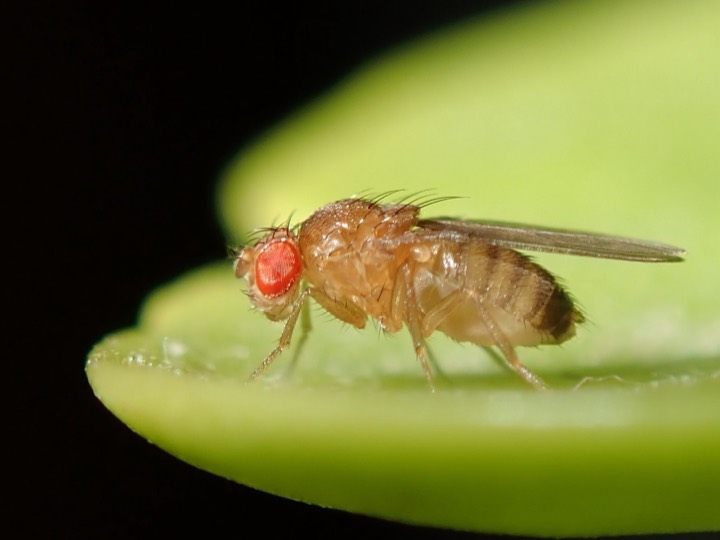

Where do fruit flies come from if I have no fruit out?
Fruit flies come from anything fermenting, not just a fruit bowl. The forgotten potato or onion at the back of the cupboard, a splash of wine or beer in the recycling, the sticky film under the toaster, a damp mop head, the sludge in the bottom of a green bin, an unrinsed pop can, even the moist soil of a houseplant. They breed in the yeast of fermentation and can complete a full egg-to-adult cycle in about a week at Toronto summer kitchen temperatures, so a single overripe banana skin in the bin keeps a swarm going. The honest part most exterminators skip: if you have fruit flies, there is a food source in the room, and removing it is the entire job.
How do I find the source?
Go through the kitchen in this order and remove what you find:
- Produce. Check every potato, onion, tomato, and piece of fruit, including the ones at the back of a cupboard or the bottom of a basket. Throw out anything soft, bruised, or sprouting.
- Bins. Empty and rinse the garbage, recycling, and green bin. Fermenting liquid pools in the bottom and the lid rim, and that residue is a breeding site on its own, so wash it rather than just re-lining it.
- Spills and residue. Wipe under and behind the toaster, microwave, fridge, and small appliances, and look for a sticky drip down a cabinet side.
- Wet items. A damp mop, a sponge, a wet dishcloth, and a recycling bag with juice in it all breed flies. Dry or bin them.
- Drinks and houseplants. Rinse every bottle, can, and glass before it hits the bin, and let overwatered plant soil dry out, since it grows near-identical fungus gnats.
Remove the source and the visible adults die off within a few days on their own. A bowl of apple cider vinegar with a drop of dish soap, covered with pierced plastic wrap, traps the remaining adults while the source-removal does the real work. The trap is not the cure; the cleanup is.
How do I stop drain flies?
Drain flies stop when you clean the organic film inside the drain they are breeding in, not by pouring bleach down it. The larvae live in the gelatinous gunk coating the pipe walls just below the drain opening, and bleach runs straight past it without touching the film. Physically scrub the drain with a stiff brush, then use an enzyme or biological drain cleaner that digests the organic matter the larvae feed on. Repeat over several days, because the cleaner needs contact time to break the film down.
To confirm which drain is the source, run the tape test: tape a strip of clear packing tape sticky-side-down across the drain opening overnight, leaving a small gap so air still moves. In the morning, adults that hatched and tried to fly out will be stuck to the tape. The drain with flies on the tape is your breeding site. Test the kitchen sink, the bathroom sink, floor drains in the basement or laundry room, and any rarely-used drain where the film builds up undisturbed.
Bleach and boiling water alone do not fix drain flies, because they do not remove the film the larvae live in. Scrub first, then treat with an enzyme cleaner. That is the difference between a two-day fix and a two-month annoyance.
Can I get rid of them myself, or do I need a professional?
Most home fruit fly and drain fly problems you can solve yourself in a few days by finding and removing the source, because that is genuinely all it takes. Call a professional when the source stays hidden after a thorough search, when the flies keep coming back after you have cleaned everything you can reach, when it is a commercial kitchen with a health inspection on the line, or when the breeding site is inside the drain line or under equipment you cannot move. In those cases we locate the source, treat the breeding sites directly with drain treatments and biological cleaners, and use a Health Canada PMRA-registered product only where one is warranted. If the fix is sanitation and you do not need us, we will tell you. That no-upsell posture is the whole point.
Why Toronto kitchens see this so often
Toronto's restaurant-dense strips and commercial kitchens are the hardest cases, because floor drains, grease traps, and high summer volume give kitchen flies constant breeding sites, and a single missed drain keeps a health inspector's fly count up. Condo and apartment garbage and recycling rooms are the residential version: a warm shared bin room can seed flies through a whole floor. In summer, ordinary home kitchens get fruit flies simply because produce ripens fast on the counter and the green bin sits warm. The pattern is the same everywhere: a source is breeding them, and closing it ends it.
For a restaurant or food-service kitchen, our commercial pest control program covers drains, traps, and documentation for inspections. If the flies come with roaches, that is the other kitchen pest with a moisture-and-food source, and the cockroach control page covers it. Pricing for any treatment is on the cost page.
Common questions
What is the difference between fruit flies and drain flies?
Fruit flies are tan with red eyes and hover around fruit, bins, and drinks; drain flies are dark, fuzzy, moth-shaped, and rest on walls beside a drain. They breed in different places, so the fix differs: fruit flies in fermenting food, drain flies in the gunk inside drains.
Where do fruit flies come from if I have no fruit out?
From anything fermenting: a forgotten potato or onion, spills under appliances, wine or juice residue in the recycling, a damp mop, or the sludge in a green bin. If you have fruit flies, a food source is in the room, and removing it is the fix.
How do I find the source?
Work through produce, bins, spills, wet items, drinks, and houseplant soil in order, removing anything fermenting or soft, and rinse every bin including the lid and bottom. A covered apple cider vinegar trap catches the remaining adults, but removing the breeding source is what actually ends it.
Can I get rid of them myself or do I need a professional?
Most home cases you can fix yourself in a few days by removing the source. Call a professional when the source stays hidden after a full cleanup, when they keep returning, when it is a commercial kitchen, or when the breeding site is inside a drain line. We locate the source, treat the breeding sites, and use a registered product only if one is warranted.
How do I stop drain flies?
Scrub the organic film inside the drain with a brush, then use an enzyme or biological drain cleaner over several days. Bleach and boiling water do not work, because they run past the film the larvae live in. Use the overnight tape test to confirm which drain is the source before you treat it.
How long does it take to get rid of them?
Once the source is removed, the visible adults die off within three to seven days as no new flies hatch. Drain flies take a little longer, because the enzyme cleaner needs several days of contact time to break down the film. If flies persist past a week, the real source has not been found yet.
Reviewed August 2026.
Prefer to talk? Call
(365) 217-5987Tell us the pest and your neighbourhood and we give you a price range on the spot. The inspection is free, and there is no charge to ask.
- Published price ranges, no "call for a quote"
- Free inspection, price locked before we start
- Licensed and insured technicians
- Two-month guarantee, one free re-treatment
- Honest advice if you do not need a pro yet
Toronto & the GTA · Same-day, 24/7 for emergencies
Get a straight quote
Tell us what you are seeing and we come back with a price range and a time. No obligation, no on-site surprise.